
Thick Glass Bongs
We have a variety of super thick glass bongs to choose including 5mm, 7mm, and even 9mm thick glass bongs. All of the water pipes found in this selection are ... Read more
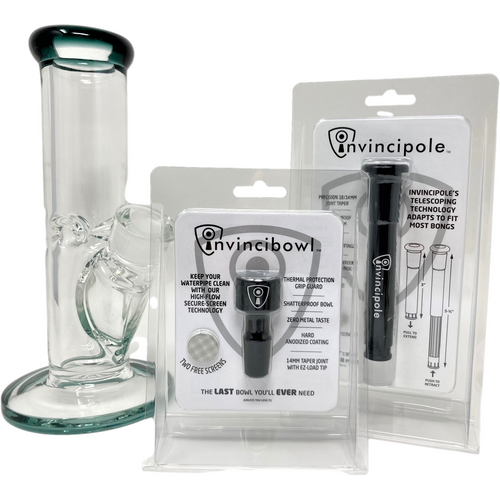
We have a variety of super thick glass bongs to choose including 5mm, 7mm, and even 9mm thick glass bongs. All of the water pipes found in this selection are very heavy duty and made with thicker glass than is found on most standard bongs.
More on Thick Glass Bongs
In the expansive market of water pipes, few features command as much respect and assurance as glass thickness. While standard utilitarian designs often feature glass walls between 3mm and 5mm, the true workhorse of the industry is known simply as "thick glass." This category typically refers to glass with wall densities of 7mm, 9mm, or even 12mm.
The choice to invest in a thick glass piece is more than just an aesthetic preference; it is a practical decision rooted in engineering and peace of mind. These heavy-duty instruments are built to withstand the realities of daily life—the accidental knock, the clumsy movement, and the thermal shock that can instantly fracture thinner glassware. They represent the apex of durability, transforming a recreational accessory into a genuine, long-term investment.
The Science of Borosilicate and Wall Density
The foundation of any quality water pipe is its material: borosilicate glass. This material, originally developed for laboratory use (Pyrex), is crucial because it possesses a low coefficient of thermal expansion, meaning it can handle the intense heat from a flame and the immediate cooling from water without shattering.
However, even borosilicate glass has its limits, especially when subjected to mechanical shock (being dropped or knocked over). This is where wall thickness becomes the decisive factor in longevity.
Understanding the Millimeter Rating
The millimeter rating—7mm, 9mm, etc.—refers to the distance between the inner and outer surface of the glass wall. This dimension directly influences the piece’s resistance to two main types of failure:
-
Mechanical Impact Resistance: This is the most obvious benefit. A 9mm wall provides substantially more mass and structural rigidity than a 5mm wall. The kinetic energy from an impact is dispersed over a greater volume of material, making it significantly harder to initiate a crack or rupture the glass entirely.
-
Thermal Shock Dampening: While borosilicate handles temperature changes well, extreme thickness can also act as an additional buffer. The increased thermal mass allows the heat to dissipate more evenly throughout the material, reducing localized stress points.
In essence, stepping up from 5mm to 9mm is not a linear increase in strength; it is a geometric increase in resilience. A piece of 9mm glass is often considered "bomb-proof" under typical usage conditions.
Practical Benefits: Stability and Thermal Mass
The practical advantages of thick glass go far beyond mere impact resistance. The increased material mass fundamentally alters the piece's stability and thermal properties during use.
Unmatched Stability
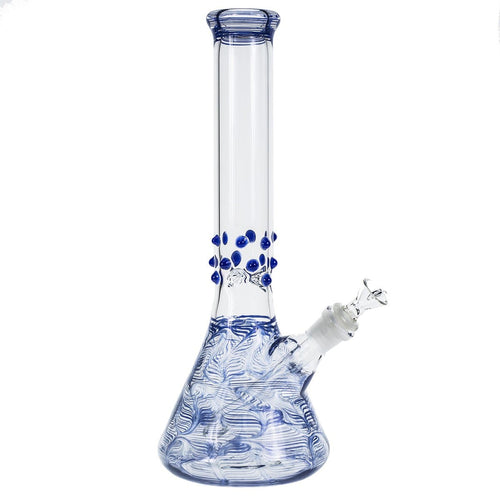
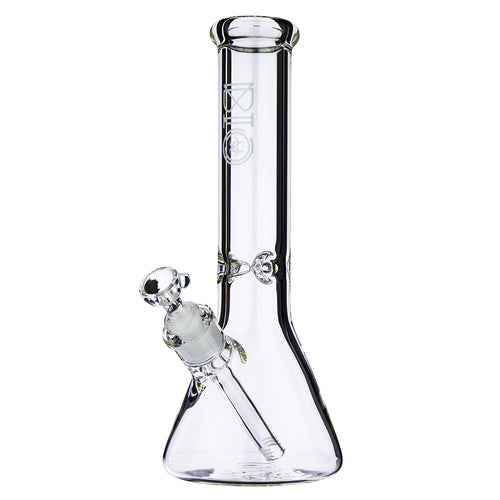
The added weight of thick glass, especially when concentrated in the base and joint sections, drastically lowers the center of gravity of the entire structure. This is particularly noticeable in popular designs like the beaker bong, which already employs a wide, stable base.
A heavy-duty piece standing on a flat surface is profoundly difficult to accidentally tip over. Where a 4mm straight tube might wobble or fall with a slight nudge, a 7mm or 9mm counterpart will likely remain firmly planted. For users with pets, roommates, or simple butterfingers, this anti-tip stability is arguably the most valuable daily feature. The confidence and peace of mind that comes from knowing a slight bump won't result in a messy spill and a broken piece are invaluable.
The Thermal Flywheel Effect
Thick glass possesses a high thermal mass—it takes more energy to heat up and, crucially, more time to cool down. While this doesn't directly influence the cooling of the smoke (which is handled by the water), it contributes to the overall thermal experience.
For pieces used frequently or in quick succession, the thick glass walls resist becoming warm to the touch. The piece itself stays cooler for longer, providing a more comfortable and consistent feel, especially if it incorporates an ice catch or is pre-chilled. This thermal inertia helps maintain the cool environment desired by the user.
Manufacturing Challenges and Premium Pricing
Achieving uniform thickness and precise geometry in thick glass requires advanced skill, significant resources, and more time, all of which contribute to the higher cost.
The Art of Manipulation
Blowing thick borosilicate is exponentially more challenging than working with thinner glass. To form a pipe with 9mm walls:
-
Extreme Heat and Time: The glass must be heated to a much higher temperature for a longer duration to become pliable. Keeping the entire, massive section of glass at a consistent working temperature requires specialized, powerful torches and precise control.
-
Massive Air Pressure: More lung power (or external air pressure) is needed to inflate the massive amounts of molten glass required to achieve a wide chamber with such thick walls.
-
Annealing Cycle: Annealing is the controlled cooling process that relieves stress within the glass structure. The thicker the glass, the slower and more meticulous the annealing process must be. If cooled too quickly, internal stresses remain, making the thick glass paradoxically fragile and susceptible to shattering from minor impact or temperature changes.
Due to these complexities, fewer glassblowers and studios possess the equipment and expertise to consistently produce high-quality, perfectly annealed thick glass above 7mm. This supply limitation, combined with the sheer amount of expensive borosilicate rod used, justifies the premium price point. Customers are paying not just for materials, but for the advanced engineering required to stabilize that excess material.
The User Experience and Aesthetic Appeal
Beyond the empirical data of millimeters and durability, the experience of owning a thick glass water pipe carries a distinct psychological and aesthetic appeal.
The Feel of Quality
When a user picks up a 9mm thick glass bong, the difference is immediately apparent. The considerable weight communicates stability and quality—it feels substantial, durable, and luxurious. The audible clink when placing the piece down or inserting the heavy glass slide is deep and satisfying, contrasting sharply with the lighter, higher-pitched sound of thinner glass. This tactile feedback reinforces the perception of a premium, lasting product.
While the glass thickness itself does not filter the smoke any better than thin glass, the overall confidence derived from the piece's fortification allows the user to focus entirely on the ritual without the anxiety of potential breakage.
The "Scientific" Aesthetic
Thick glass is often associated with the scientific glass aesthetic—clean, clear, and focused entirely on function and durability. Many prominent brands that specialize in thick glass consciously avoid overly complex color work or highly decorative attachments, instead emphasizing precision-ground joints, seamless construction, and the pure, formidable presence of the dense, clear material.
This aesthetic preference speaks to a market segment that values engineering over ornamentation, viewing their piece as a tool built for performance and longevity, rather than a fragile piece of art.
Conclusion: An Investment in Assurance
The thick glass water pipe occupies a vital niche in the market, serving the user who prioritizes longevity and functional integrity above all else. Whether it’s the robust 7mm used in everyday drivers or the tank-like 9mm and beyond, the added density offers tangible benefits: unparalleled stability, superior mechanical resilience against impact, and effective dampening of thermal stress.
It is an investment that pays for itself in avoided accidents, spilled water, and the simple, continuous assurance that comes from owning a formidable piece of hardware. For those seeking the ultimate combination of form, function, and fortification, thick glass remains the undisputed champion.
Show less







-
Previous
- Page 1 of 2
- Next